






Where Existing Solutions Fail






1
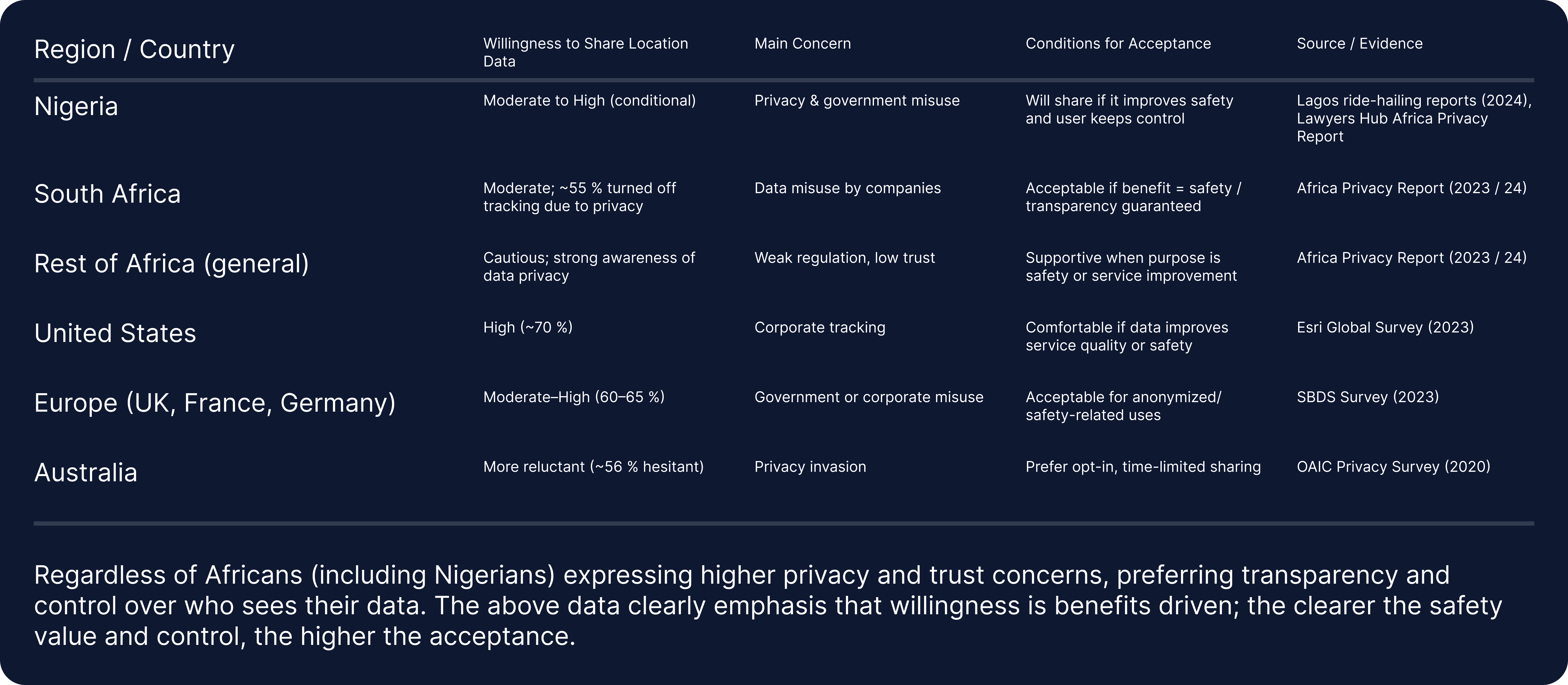
Users want safety assistance
but fear losing autonomy.
Data Privacy
95%
Transparency in AI Reasoning
92%
Human Backup Option
87%
Clear AI Decisions Logic
84%
Emergency Contacts Notified
71%
2
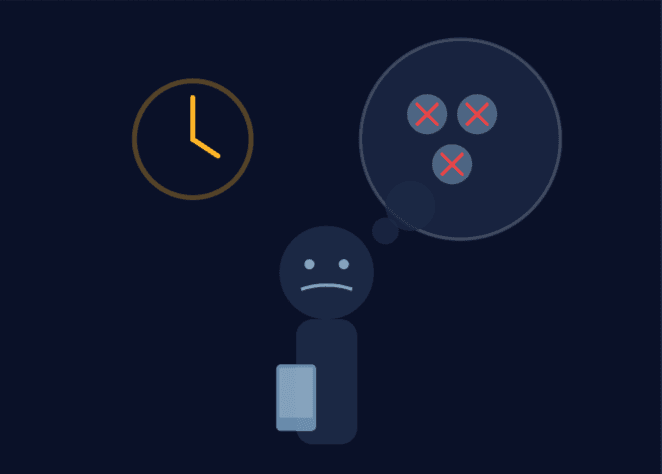
Decision time for simple navigation choices increased by 675% when tipsy compared to baseline, revealing severe impairment in basic wayfinding tasks.
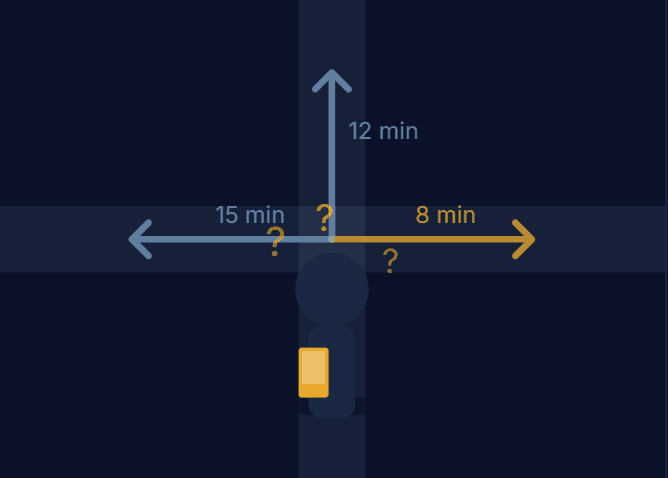
Where Users Get Stuck in Current Apps
Decision Time (Secs)
4s
Sober
18s
Tired
31s
Tipsy
3
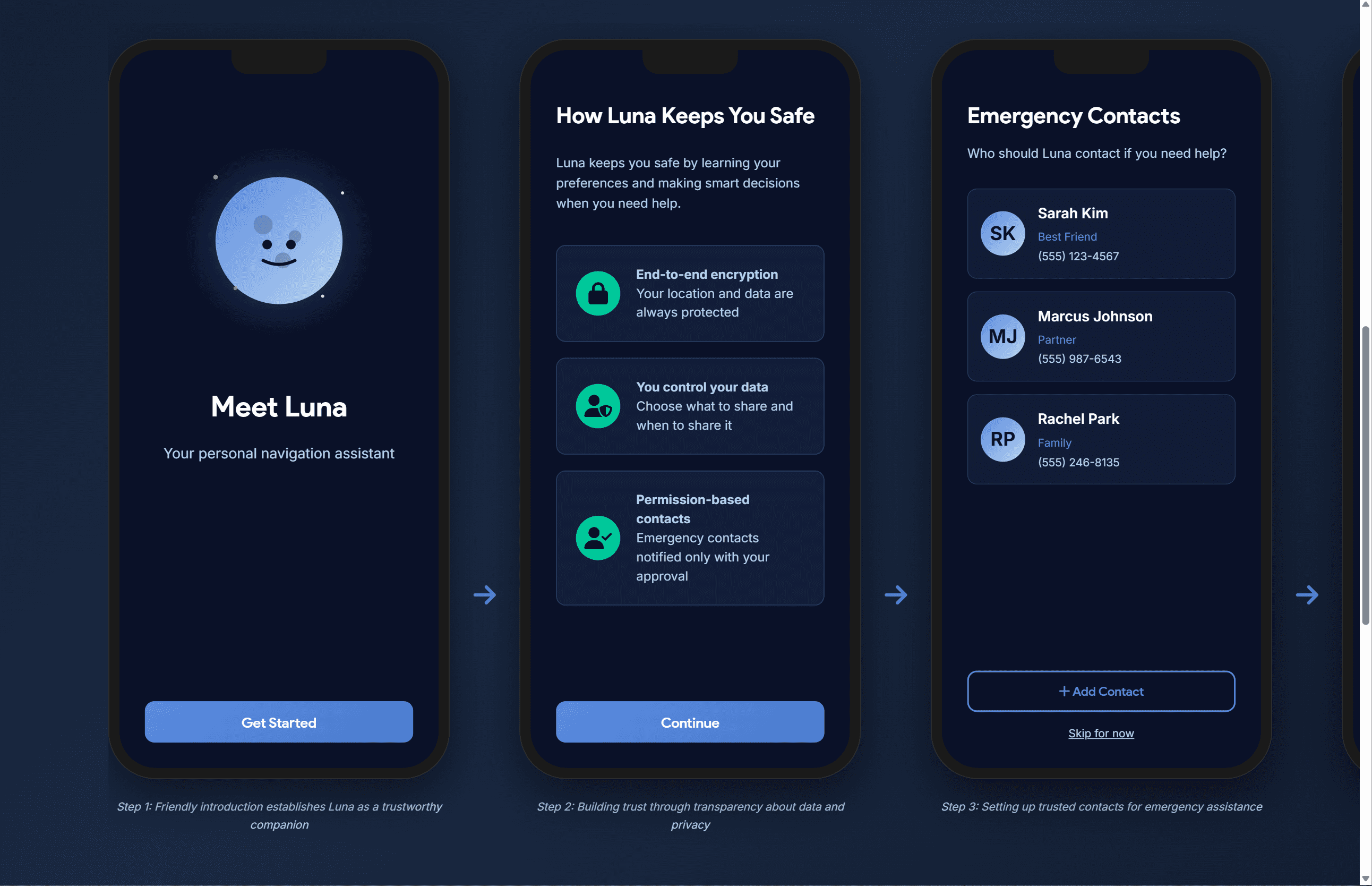
Safety is personal and context-dependent
Users defined "safe route" differently based on personal experiences and priorities. A one-size-fits-all approach would fail 68% of users.
Prefer voice navigation when coordination is impaired.
Forget to share location with friends before heading home.
Make riskier choices when tired or impaired.
Want automatic check-in with trusted contacts.
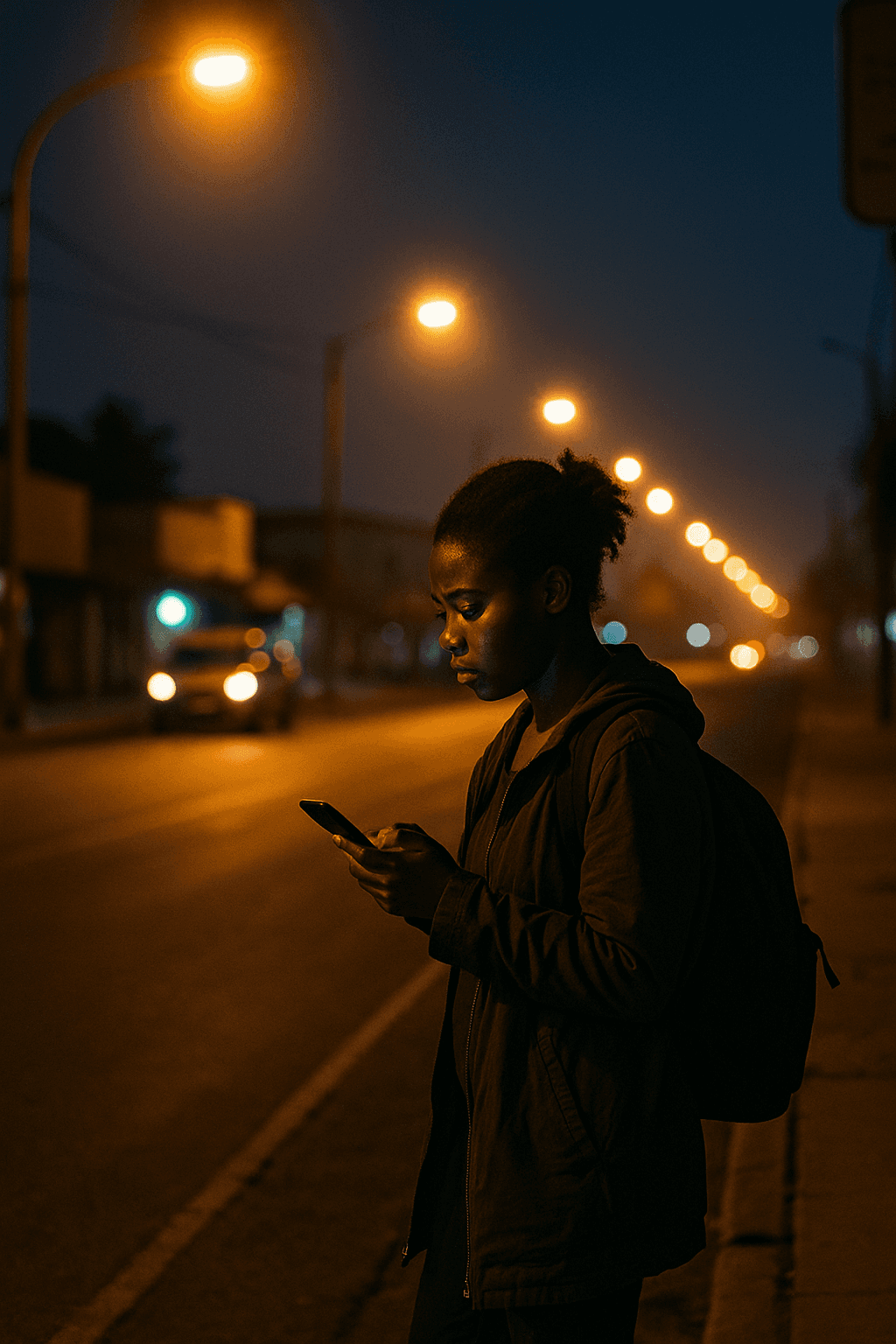
Have gotten lost or confused returning home at night.
Feel anxious about safety during late-night travel.
Can't type address accurately
Motor Skills Impaired
Can't evaluate route safety
Judgment Impaired
Forget to activate safety features
Planning Impaired
Can't explain location clearly
Communication Impaired



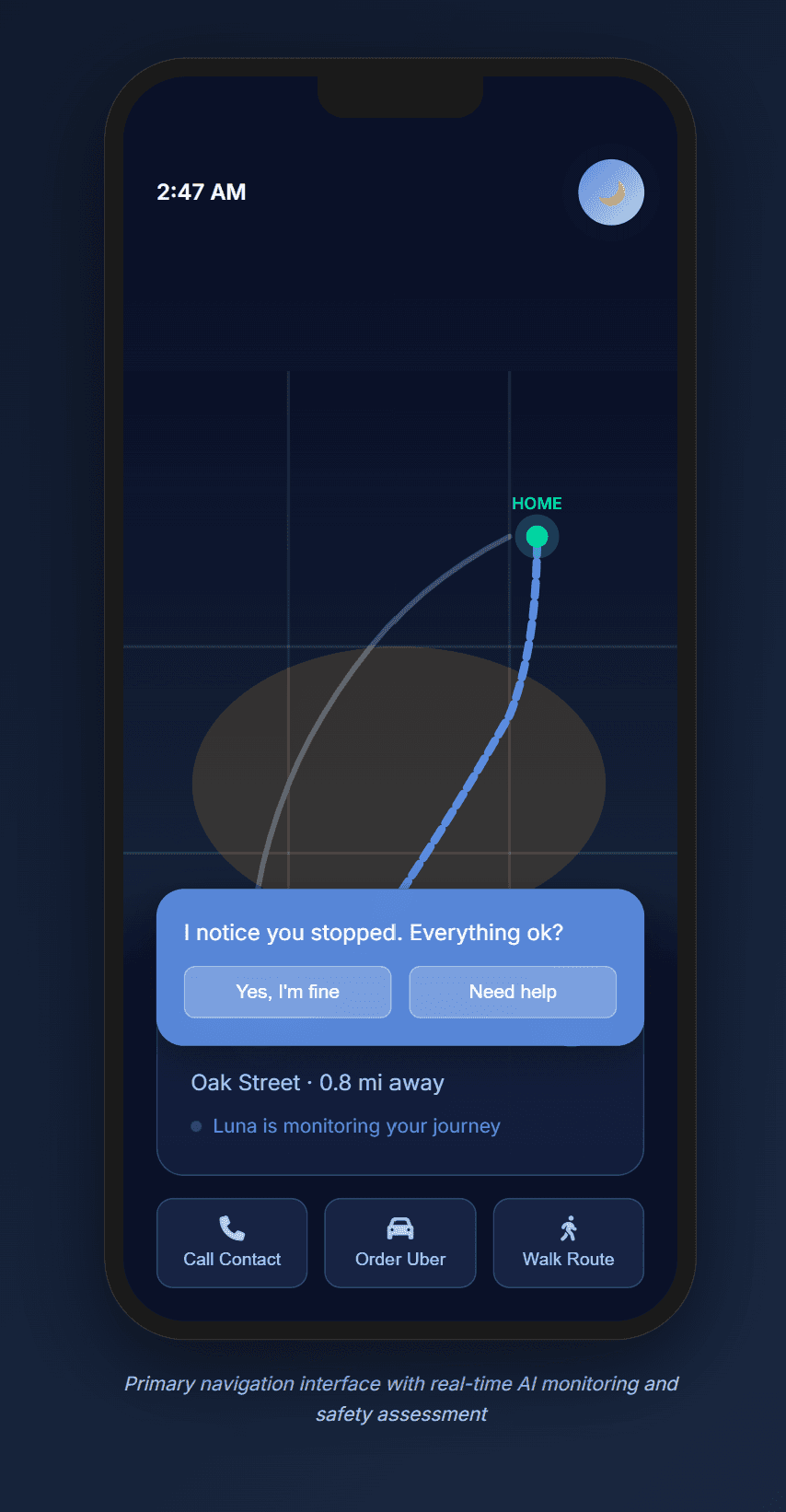

Normal Monitoring
Subtle blue glow indicates passive monitoring. Luna tracks journey progress and updates ETA without interrupting.

Attention State
Amber glow when unusual behavior detected (stopped moving, off-route, hesitant navigation). Luna asks gentle questions.

Alert State
Red glow for safety concerns (extended unresponsiveness, unsafe area after hours, distress signals). Luna takes proactive action.
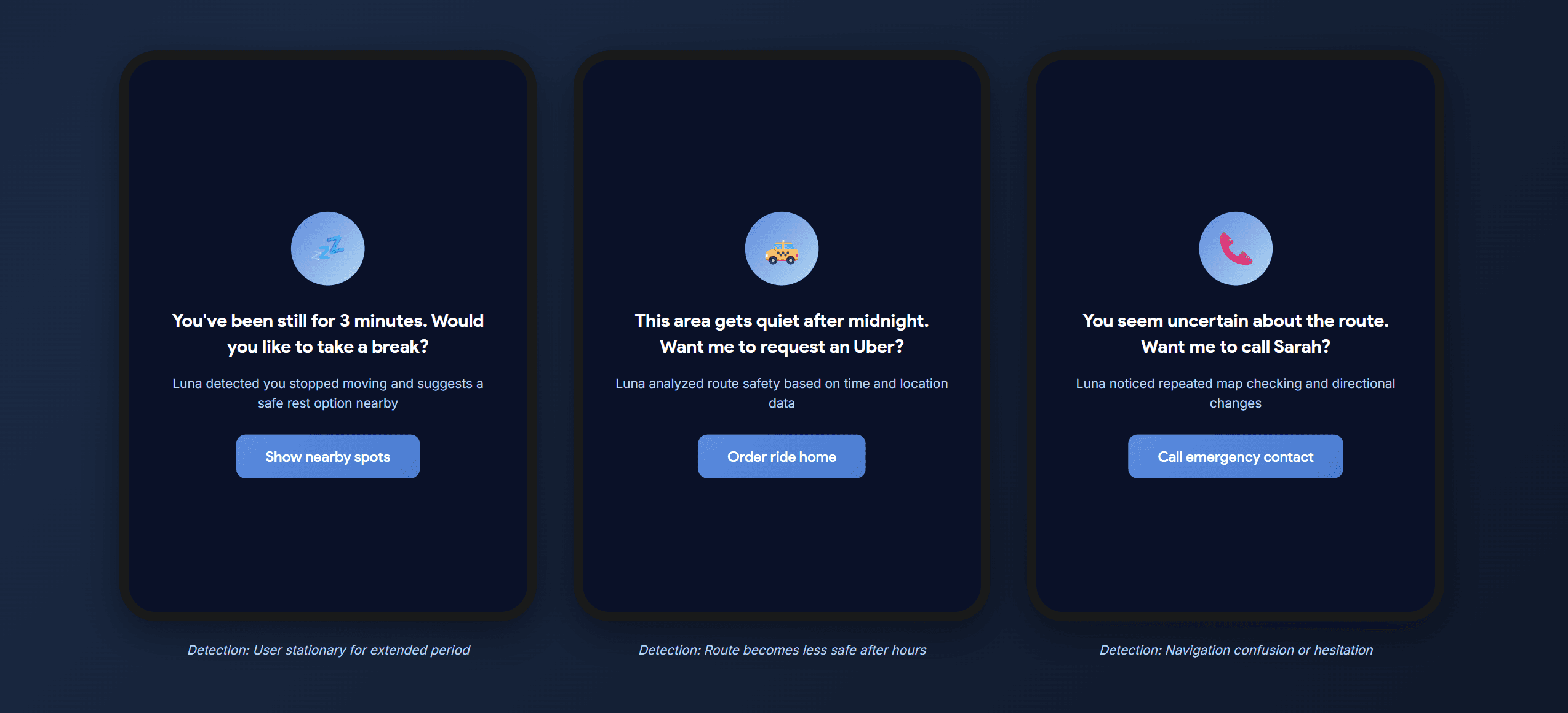
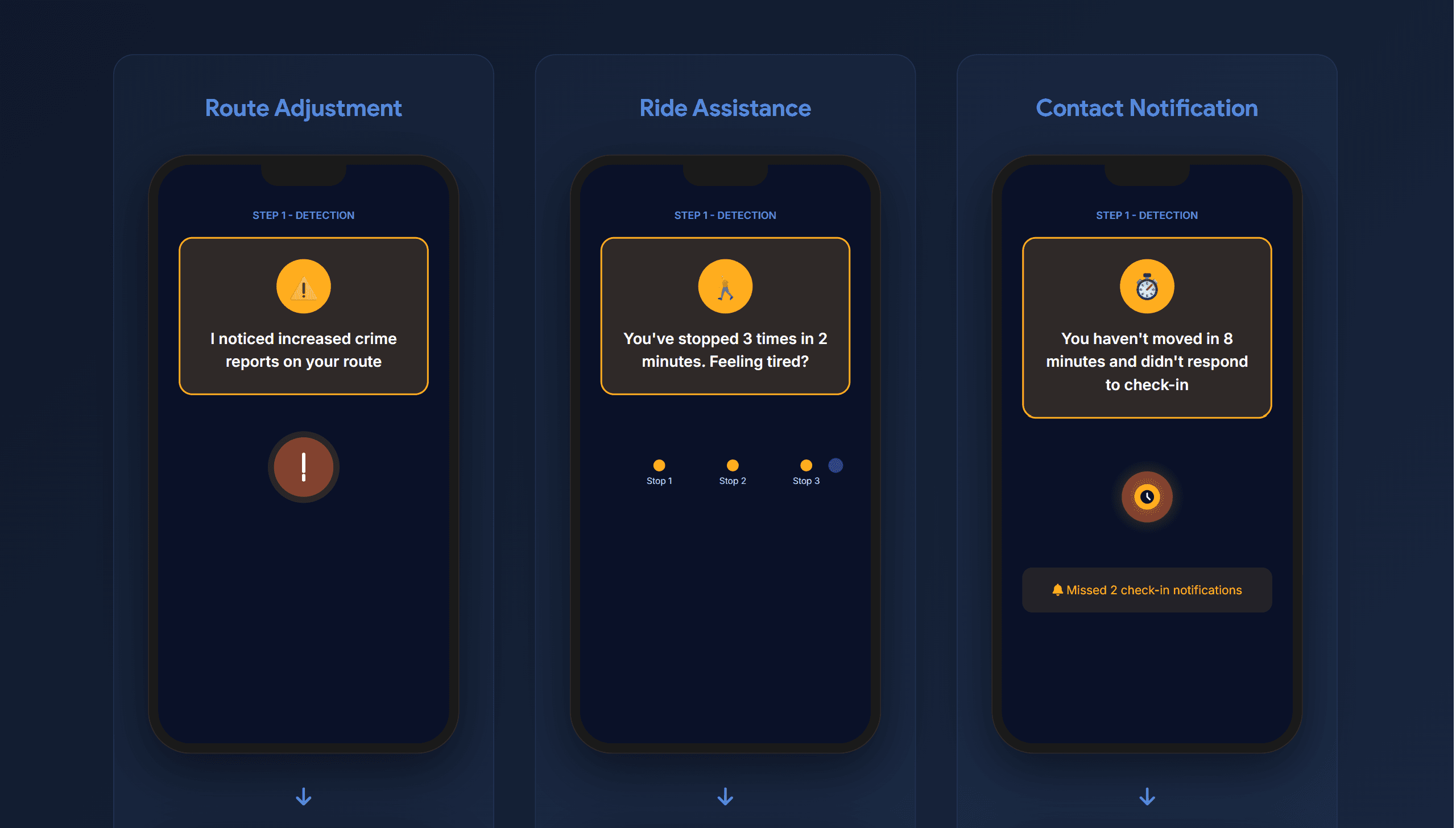
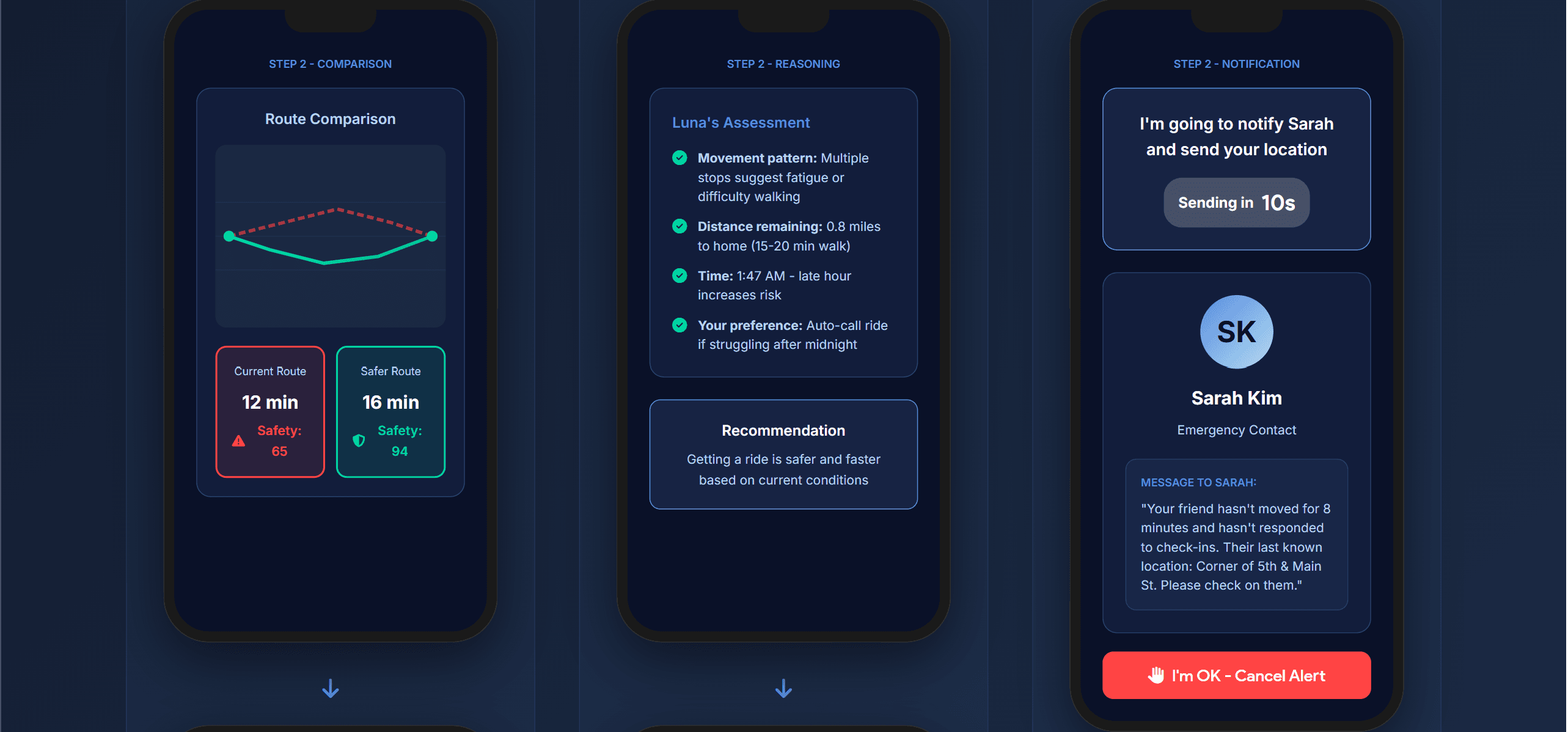
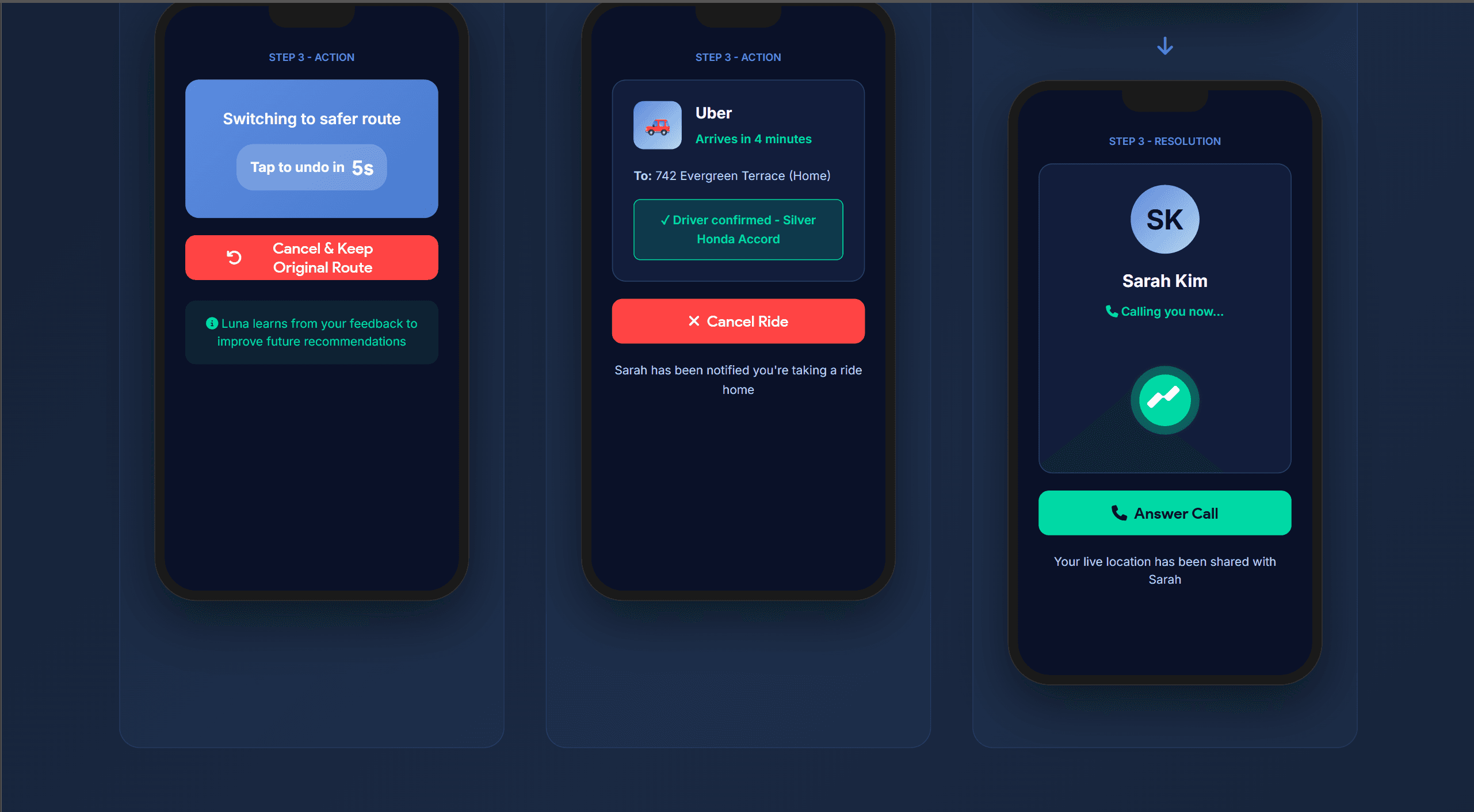




Auto Mode: Luna acts automatically when detecting safety concerns
Manual Mode: Luna only suggests - you choose every action
Switch anytime: Change modes instantly based on how you feel
Auto Mode
Luna takes proactive safety actions
Faster response in emergencies
Minimal cognitive load for user
All actions can be cancelled
Best for vulnerable states
Auto Mode
Luna takes proactive safety actions
Faster response in emergencies
Minimal cognitive load for user
All actions can be cancelled
Best for vulnerable states
Toggle the mode based on your current state. Feeling tired? Switch to Auto.
Want more control? Choose Manual. The choice is always yours.

Movement Pattern
You stopped 4 times in 3 minutes, suggesting difficulty walking steadily.
Time of Day
Late hour increases vulnerability and reduces available support options
User Preferences
You've enabled automatic ride calling for late night difficulty
Location Safety
Area has moderate crime rate and poor lighting after midnight
Distance to Home
Distance requires sustained walking ability in current state
Past Behaviour
In similar situations, you previously accepted ride suggestions

Testing Methodology
Manual Navigation
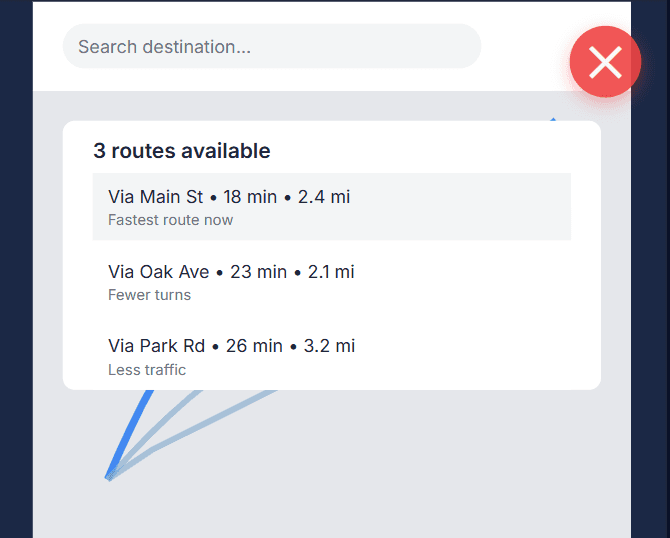
Traditional navigation interface requiring active user decision-making
at multiple points throughout the journey.
Manual route selection: User must review and choose from multiple route options
Active safety monitoring: User responsible for watching surroundings and identifying risks
Manual intervention: User decides when to call for help or alternative transport
Data entry required: User manually enters ride-share details and emergency contacts
Decision Point 1:
Select route from 3 options (fastest, safest, or scenic)
Decision Point 2:
Monitor journey progress and safety indicators
Decision Point 3:
Notice potential issue and decide on action
Decision Point 4:
Open ride-share app or call contact manually
Decision Point 5:
Enter destination and confirm booking
A
AI-Assisted (MoonRide)
Intelligent navigation with Luna AI proactively managing safety decisions and reducing cognitive load for impaired users.
AI route recommendation: Luna automatically selects safest route with clear explanation
Proactive monitoring: AI continuously assesses journey safety and user state
Predictive intervention: Luna suggests help before problems escalate
Auto-filled information: Pre-populated ride details and emergency contacts ready to go
Luna Decision:
Selected safest route (well-lit, 2 min longer) - User notified
Luna Decision:
Monitoring journey - all systems normal
Luna Alert:
"You've stopped moving for 3 minutes. Would you like me to call Sarah?"
User Override Available:
Tap to approve Luna's suggestion or choose different action
Luna Action:
Uber pre-ordered to current location, Sarah notified automatically
B
Winner
Task completion Time
Manual (A)
4.2
min
AI-Assisted (B)
2.1
min
50.0%
Faster completion
Navigation Errors (avg per session)
Manual (A)
3.7
errors
AI-Assisted (B)
0.9
errors
76.0%
error reduction
Subjective Safety Confidence (1-10 scale)
Manual (A)
6.2
/10
AI-Assisted (B)
8.9
/10
43.0%
confidence increase
Task completion Time
Preferred AI-Assisted (B)
84%
Preferred Manual (A)
16%
50.0%
Faster completion
“I didn't have to think, Luna just handled it. That's exactly what I need when I'm tired and just want to get home safely. ”
“"I felt safer knowing something was watching out for me. It's like having a responsible friend who stays sober.”
"I liked that I could override if I wanted to. Luna makes suggestions but I'm still in control. That balance is perfect."
Voice Heavy
A
Luna speaks frequently with voice prompts every 30 seconds on average. Constant reassurance and guidance.
"Turn left in 100 feet"
"You're doing great"
"Still 8 minutes from home"
"I'm here if you need me"
Average: One prompt every 30 seconds
Silent Notifications
B
Minimal audio. Visual-only notifications appear as cards. Luna only speaks for critical alerts or when user initiates.
AI route recommendation: Luna automatically selects safest route with clear explanation
Proactive monitoring: AI continuously assesses journey safety and user state
Predictive intervention: Luna suggests help before problems escalate
Auto-filled information: Pre-populated ride details and emergency contacts ready to go
Voice only for critical alerts
Adaptative
C
Winner
Luna speaks frequently with voice prompts every 30 seconds on average. Constant reassurance and guidance.
Luna is in quiet mode
You're navigating smoothly
You're navigating smoothly
Adapts to user needs in real-time.
Users wanted to feel Luna's presence without constant interruption. Adaptive communication provided reassurance during uncertain moments while staying quiet during smooth navigation.
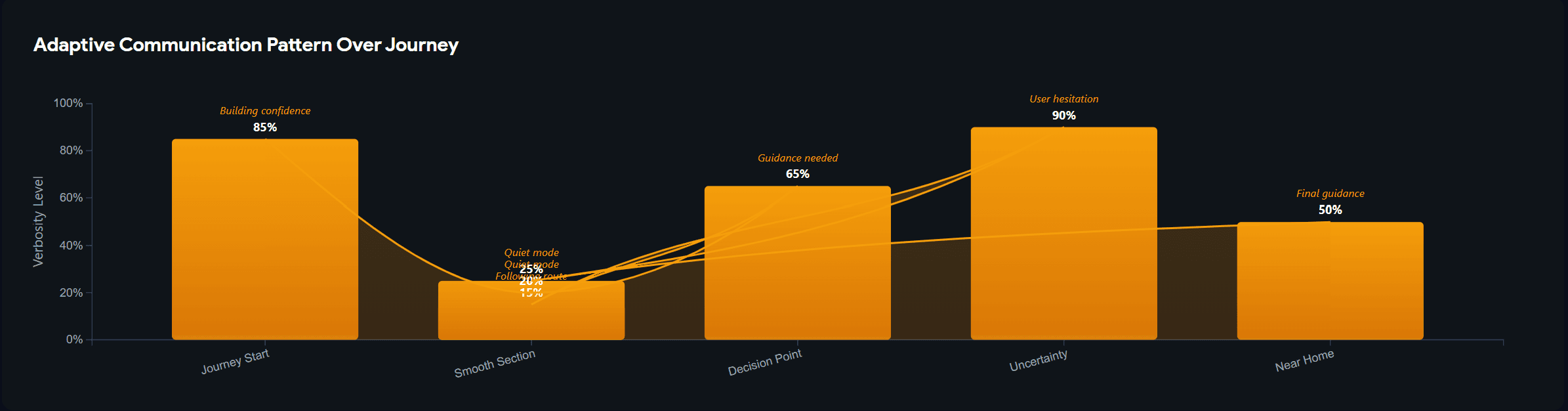
"It was like Luna knew exactly when I needed to hear her voice and when I just needed to follow the line on the map."
— Study Participant, Test Group C